A Modern Solar & Battery Upgrade Delivering Long-Term Savings for a Rural Home.
Project Overview:
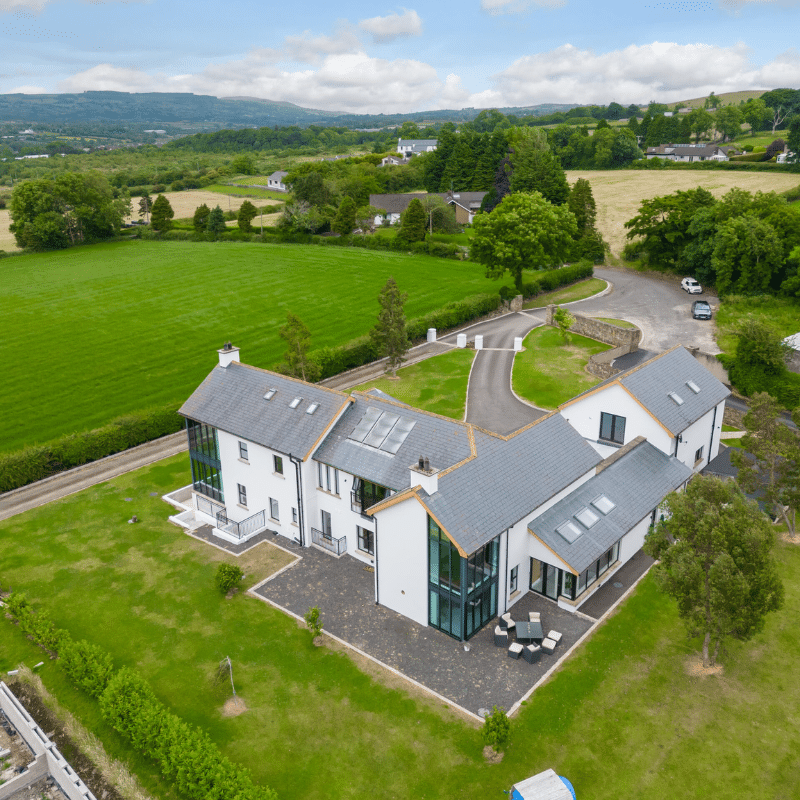
The property already benefited from solar thermal, meaning the homeowner understood the long-term advantages of renewable systems. With an annual electricity demand of approximately 6,500 kWh, the objective was clear: reduce grid reliance, lower running costs, and maintain the visual integrity of the home.
The system needed to be efficient, scalable, and capable of providing backup during power outages — all without altering the character of the property.
Background:
- Sector: Domestic (Rural Retrofit)
- System Type: Solar PV & Battery Storage
- Solar Array: 18 × 425W panels (~7.65 kW)
- Expected Generation: ~8,000 kWh per year
- Annual Demand: ~6,500 kWh
- Inverter: 5 kW SIG Energy
- Battery Storage: 9 kWh modular SIG Energy (expandable)
- Backup: Gateway installed for outage protection
The Challenge:
The property’s energy use was moderate but consistent. The client wanted:
- A meaningful reduction in annual electricity costs
- A system that exceeded household demand
- Discreet installation that respected the home’s design
- Backup capability for peace of mind
- A long-term financial return without overcomplication
The solution needed to balance performance, aesthetics and practicality
The Design Solution:
We installed a safe-spacing array of 18 × 425-watt solar panels, delivering a total system capacity of approximately 7.65 kW. The array was configured to maximise yield while maintaining visual symmetry and roof integrity.
The system is projected to generate around 8,000 kWh annually, comfortably exceeding the home’s 6,500 kWh demand.
To complement the PV array, we installed:
- A 5 kW SIG Energy inverter
- 9 kWh modular battery storage (expandable)
- A backup gateway to maintain essential loads during outages
Battery storage reduces evening grid reliance by storing surplus daytime generation, while the backup system ensures continuity during power interruptions.
Why This Worked:
Rather than installing a standard package, the system was designed around the property’s actual demand profile. By exceeding annual consumption and integrating modular battery storage with backup capability, the homeowner benefits from reduced costs, improved reliability and long-term adaptability.
The result is a complete renewable ecosystem — solar thermal, high-yield PV, battery storage and backup — working together to deliver meaningful performance.
%
Energy Production vs Home Demand
This system generates approximately 8,000 kWh per year, comfortably exceeding the property’s annual electricity demand of 6,500 kWh.
That means the home’s energy usage is covered at 123% of demand, producing a surplus of 1,500 kWh annually.
Key Results & Outcomes
Significant reduction in annual electricity costs
Solar generation exceeds total yearly demand
Battery reduces reliance on grid during peak hours
Backup capability protects essential circuits
Projected net gain of £20,000–£40,000 over 20 years
The system now delivers both financial return and improved energy resilience
Project Overview
The property already benefited from solar thermal, meaning the homeowner understood the long-term advantages of renewable systems. With an annual electricity demand of approximately 6,500 kWh, the objective was clear: reduce grid reliance, lower running costs, and maintain the visual integrity of the home.
The system needed to be efficient, scalable, and capable of providing backup during power outages — all without altering the character of the property.
Background:
- Sector: Domestic (Rural Retrofit)
- System Type: Solar PV & Battery Storage
- Solar Array: 18 × 425W panels (~7.65 kW)
- Expected Generation: ~8,000 kWh per year
- Annual Demand: ~6,500 kWh
- Inverter: 5 kW SIG Energy
- Battery Storage: 9 kWh modular SIG Energy (expandable)
- Backup: Gateway installed for outage protection
The Challenge:
The property’s energy use was moderate but consistent. The client wanted:
- A meaningful reduction in annual electricity costs
- A system that exceeded household demand
- Discreet installation that respected the home’s design
- Backup capability for peace of mind
- A long-term financial return without overcomplication
The solution needed to balance performance, aesthetics and practicality.
Key Results & Outcomes
Significant reduction in annual electricity costs
Solar generation exceeds total yearly demand
Battery reduces reliance on grid during peak hours
Backup capability protects essential circuits
Projected net gain of £20,000–£40,000 over 20 years
The system now delivers both financial return and improved energy resilience
The Design Solution:
We installed a safe-spacing array of 18 × 425-watt solar panels, delivering a total system capacity of approximately 7.65 kW. The array was configured to maximise yield while maintaining visual symmetry and roof integrity.
The system is projected to generate around 8,000 kWh annually, comfortably exceeding the home’s 6,500 kWh demand.
To complement the PV array, we installed:
- A 5 kW SIG Energy inverter
- 9 kWh modular battery storage (expandable)
- A backup gateway to maintain essential loads during outages
Battery storage reduces evening grid reliance by storing surplus daytime generation, while the backup system ensures continuity during power interruptions.
Why This Worked:
Rather than installing a standard package, the system was designed around the property’s actual demand profile.
By exceeding annual consumption and integrating modular battery storage with backup capability, the homeowner benefits from reduced costs, improved reliability and long-term adaptability.
The result is a complete renewable ecosystem — solar thermal, high-yield PV, battery storage and backup — working together to deliver meaningful performance.
%
Energy Production vs Home Demand
This system generates approximately 8,000 kWh per year, comfortably exceeding the property’s annual electricity demand of 6,500 kWh.
That means the home’s energy usage is covered at 123% of demand, producing a surplus of 1,500 kWh annually.
A DESIGN-LED APPROACH TO RENEWABLES
Considering a Solar Retrofit?
If you’re looking to upgrade your property with a properly designed solar and battery system, we’re happy to discuss what approach would suit your home.
Stephen Feeney